

Laser hair removal is one of the most widely used methods of removing unwanted hair, which, despite its high safety, may have side effects such as skin burns in some situations. For this reason, treating laser hair removal burns has become one of the concerns of those applying for this method. In this article, the causes of laser burns, symptoms, methods of prevention and treatment are scientifically and accurately examined.
Can burn scars be removed with laser?
In most cases, laser burns are temporary and heal completely with proper care. The skin naturally repairs itself by replacing damaged cells. However, deep burns may require additional treatments such as laser resurfacing or microdermabrasion. Regular use of moisturizers and sunscreens can help prevent skin discoloration.
What causes laser burns?
Laser burns occur when the amount of energy delivered from the laser device is too much for the skin to handle, or when heat builds up in the superficial or deep layers of the skin due to improper settings. This can lead to redness, inflammation, or in more severe cases, blistering and discoloration of the skin.
The most important causes of skin burns after laser treatment are:
- Incorrect laser device settings:Each skin type requires specific settings in terms of wavelength, intensity, and exposure time. If these settings are not made correctly, the risk of burns increases.
- Low operator skill: Laser is a specialized procedure and the operator must be trained to adjust the device to suit the skin tone, hair thickness, and area being treated. Operator error can lead to thermal damage to the skin.
- Lack of cooling system:The presence of a cooling system in the laser device plays an important role in protecting the skin. If this system does not function properly, excess heat remains in the skin and leads to burns.
- Prolonged laser contact with the skin: If the laser radiation remains focused on one spot for too long during treatment, the skin temperature will increase and the likelihood of blistering or redness will increase.
- Using substandard or low-quality devices: Devices without medical approval or counterfeit brands usually do not have the necessary precision in energy control and cause skin damage.
- Dark or tanned skin: Dark skin has a higher amount of melanin, which absorbs more laser energy; as a result, the likelihood of heat buildup and burns increases.
- Using photosensitizing medications: Some medications, such as retinoids, antibiotics, and nonsteroidal anti-inflammatory drugs, increase the skin’s sensitivity to light and increase the risk of burns.
- Presence of a tattoo at the treatment site: Old tattoos and scars may reflect laser energy unevenly, causing burned spots or discoloration.
Burn-prone areas of the body
Based on clinical observations, certain areas of the body are more likely to be burned because they either have thinner skin or absorb heat more quickly due to higher sensitivity. The areas most at risk are:
- Face and neck
- Armpit
- Bikini area
- Arms and legs
Symptoms of burns after laser
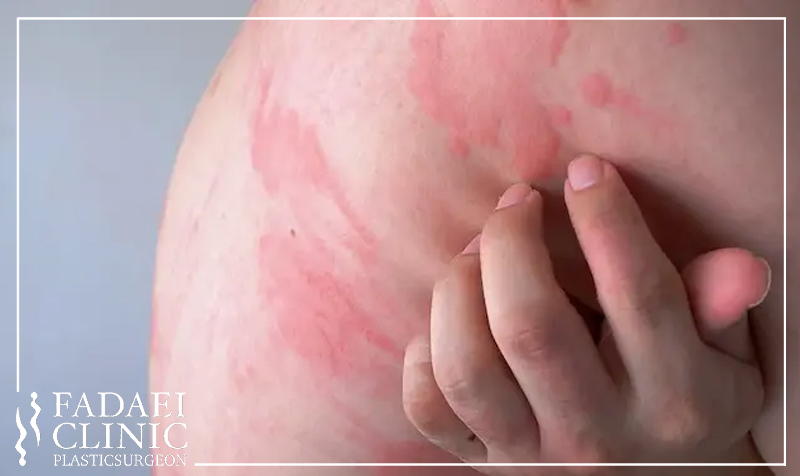
- Redness and inflammation of the skin
- Burning sensation or pain in the treated area
- Small blisters or superficial swelling
- Dry or flaky skin
- Skin discoloration (local darkening or lightening)
- In severe cases, peeling or hyperpigmentation
Treatment of burns after laser hair removal
The first and most important step in treating a laser hair removal burn is for a dermatologist to diagnose the type and severity of the burn. Burns are divided into two main types. After examining your symptoms, your doctor will determine the type of treatment, appropriate ointment, and care method based on your skin condition.
Treatment of first-degree burns after laser
Superficial burns are usually mild and heal in a short time with home treatment and proper care. At this stage, the following methods can be used:
- Quickly cool the skin: Immediately after you see signs of a burn, cool the area with a clean, damp cloth or cold compress. (Do not put ice directly on the skin.)
- Take mild painkillers: Such as acetaminophen or ibuprofen to reduce burning and inflammation.
- Use anti-inflammatory and healing creams: such as aloe vera, zinc oxide, or calendula ointment to reduce redness.
- Protect your skin from sunlight with sunscreens with high SPF.
- Do not manipulate the skin or scratch the burn site.
Treatment of second-degree burns after laser
In deeper burns (second degree), in addition to redness, blisters and more severe pain may be observed. In these cases, it is necessary to see a dermatologist. The doctor usually uses the following treatments:
- Topical antibiotic ointments such as clindamycin or erythromycin to prevent infection
- Stronger healing ointments such as Cicalift or Strataderm to prevent scarring
- In certain cases, corticosteroid injections to control inflammation
- In severe burns, laser resurfacing or skin surgery may be required.
Treatment of bikini burns after laser
The bikini area is one of the most sensitive parts of the body and can become inflamed or burned if you are not careful. The following measures are recommended to take care of this area:
- Immediately cool the area with a cold towel or ice wrapped in a clean cloth.
- Using zinc oxide or calendula ointment to reduce inflammation
- Wearing loose cotton clothing to prevent friction and sweating
- Avoid direct contact with hot water or detergents for up to 48 hours.
Blister treatment after laser
- Avoid popping blisters, as this increases the risk of infection.
- Keep the blister area clean and dry and avoid direct contact with hands or cosmetics.
- If there is severe discharge or redness, your doctor may prescribe an antibiotic ointment.
- To speed up healing, use healing ointments containing aloe vera or dexpanthenol.
How to prevent laser burns?
Preventing laser burns is easy. To reduce the risk of injury, it is essential to follow these recommendations:
- Choosing a reputable clinic under the supervision of a doctor: Performing laser treatment in well-equipped centers with expert staff is the most important factor in preventing skin complications.
- Performing a skin test before starting treatment: It is best to perform a small test on a part of the skin before starting the sessions to determine the skin’s possible reaction to the laser.
- Avoid sun exposure or tanning: Tanned skin increases sensitivity to heat. It is recommended to avoid direct sunlight and solariums for at least two weeks before laser treatment.
- Use a quality cooling gel: These gels help reduce temperature and protect the epidermis. Drying or not using the gel can increase the intensity of the heat.
- Do not use photosensitizing medications before laser: If you are taking medications such as retinoids, doxycycline, or anti-acne medications, you should inform your doctor.
- Choosing the right device for your skin type:Different devices, such as diode, alexandrite, and NDIG, work differently based on skin tone. Choosing the wrong device can increase the risk of burns.
- Following post-laser care: It is recommended to use restorative creams, cold compresses, avoid hot showers, and avoid exposure to sunlight in the days following laser treatment.
Choosing the best laser hair removal clinic to prevent burns
By choosing a reputable clinic under the supervision of a dermatologist, you can easily prevent this problem. If you are planning to undergo laser hair removal and are looking for a safe environment, standard devices, and trained operators, we are at your service at Dr. Mohsen Fadaei Clinic. In this center, all laser services are performed with the latest devices in the world and under the supervision of a specialist physician, in addition to high effectiveness, to prevent burns, inflammation, and skin discoloration.
Specialized consultation and skin testing before the start of the sessions are part of our clinic’s free services so that you can enjoy smooth, hair-free skin with peace of mind and without complications.
Frequently Asked Questions about burns after laser hair removal
- Why do we get burns after laser hair removal?
Burns usually occur due to improper device adjustment, low operator skill, lack of a cooling system, tanned skin, or use of photosensitizing medications.
- Are laser burns permanent?
In most cases, the burn is superficial and heals completely. Only in deep burns may a temporary scar or mark remain, which can be resolved with restorative treatments.
- How do we know if our skin is burned after laser treatment?
Signs of a laser burn include severe redness, a burning sensation, blistering, pain, or skin discoloration. In mild cases, it may resemble a sunburn, and in more severe cases, blisters may develop.
- Is dark skin more susceptible to laser burns?
Yes. Dark skin absorbs more heat due to more melanin, so they are more likely to burn and the right device should be used.
- Does laser burns cause spots or darkening of the skin?
Sometimes hyperpigmentation (local darkening) or hypopigmentation (excessive lightening of the skin) may occur, which is usually temporary and improves with topical treatments.
- Can laser treatment be continued after a burn?
No. You must wait until your skin is fully healed. Usually, your doctor will recommend a gap of at least 2 to 4 weeks between sessions to allow your skin to heal.
- Can laser burns be treated at home?
For mild cases, yes; with cold compresses, aloe vera cream, and sun avoidance. But in case of blisters, severe pain, or skin discharge, it is essential to see a dermatologist.
- Is it beneficial to use aloe vera after laser?
Yes, aloe vera gel has anti-inflammatory and healing properties and is one of the best options for reducing redness and burning after laser treatment.
You can use lightening creams containing vitamin C or mild anti-blemish ingredients (under the supervision of a doctor).