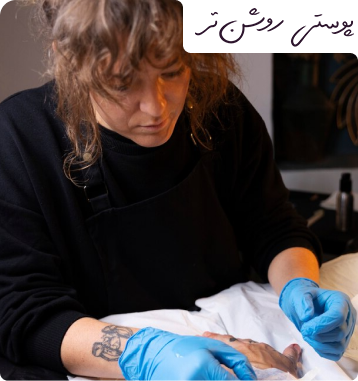
Although tattoos may look attractive at first, many people decide to remove them after a while. In the past, tattoo removal methods included surgery, skin abrasion, or the use of chemicals, which were usually accompanied by pain, wounds, and scars. However, today, with the advancement of medical technology, two less invasive and safe methods are used to remove tattoos, both of which we will describe below: the Q-switch laser and the Genesis Cotra laser.
Superficial exfoliation to remove dead cells, reduce blemishes, and brighten skin.
Genesis Kotra
Deep oxygenation of the skin with antibacterial, anti-acne and rejuvenating properties.
Q-switch laser for removing old tattoos
The Q-switch laser delivers a lot of energy to the skin in a very short time by creating very short pulses in the nanosecond range. This high energy breaks down and decomposes the tattoo ink particles without damaging the surrounding healthy tissues. These broken particles are then eliminated by the body’s lymphatic system over time. In fact, the Q-switch laser targets only the tattoo pigments with very high precision, causing the tattoo color to gradually fade and eventually be removed.
Benefits of tattoo removal with Q-switch laser
1. Brighter and more even skin tone. Tattoo removal without scarring.
Removing spots and tattoos with Genesis Kotra laser in Tehran
One of the most modern treatments that is used in both skin blemishes and tattoo removal is the Genesis Cotra Laser; a technology that returns smooth, clear, and even skin to you without causing scars or pain.
Genesis Cotra Laser is a non-invasive and advanced laser that penetrates deep into the skin using gentle microsecond pulses and stimulates natural collagen production by creating controlled heat. This process regenerates skin cells, reduces blemishes, removes acne scars, improves skin texture, and even gradually fades tattoo color.
This device is equipped with advanced technologies such as a skin temperature monitoring system and triple target beams to transfer laser energy to the surface layers of the skin with high precision and without damage.
Benefits of using Genesis Cotra laser
• Completely non-invasive treatment with no need for anesthesia or hospitalization
• Creates a gentle warming sensation without severe pain or burning
• Safe for all skin types (even darker skin tones)
• No need for a long recovery period
• Can be used to remove blemishes and tattoos in one treatment session
I had mesotherapy and laser for the skin blemishes on my cheeks, the results were really great. My skin became brighter and the blemishes almost disappeared.
I removed the sunburn spots on my forehead with a few laser treatments. My skin is brighter and more even, I’m really satisfied
Frequently Asked Questions
Does tattoo removal with a Q-switch laser completely remove the tattoo?
Yes, in most cases the tattoo will completely disappear after a few Q-switch laser sessions. However, the success rate also depends on the depth and color of the tattoo ink, skin type, and the skill of the doctor.
How many sessions are needed to completely remove a tattoo?
It typically takes between 4 and 8 treatments, spaced 4 to 6 weeks apart, to completely remove the tattoo. Older tattoos usually fade faster.
Is laser tattoo removal painful?
A tingling or mild warming sensation may be present, but this sensation is minimized with the use of numbing cream and a cooling device.
What is the difference between QSwitch and Genesis Cotra lasers in tattoo removal?
The QSwitch is more suitable for deeper, more colorful tattoos, while the Genesis Cotra is more suitable for superficial tattoos and simultaneous treatment of blemishes and skin rejuvenation.
Does laser tattoo removal cause scars?
No, when performed in a reputable clinic and by a specialist, the QSwitch and Genesis Cotra lasers do not cause any permanent wounds or scars.
What care is needed after tattoo removal?
Do not wash the area for 24 hours, use a healing ointment, avoid the sun, saunas, and swimming pools, and be sure to wear a high SPF sunscreen.
Can eyebrow or lip tattoos be removed with laser?
Yes, Q-switch laser is one of the best methods for removing permanent makeup tattoos such as eyebrow, eyeliner or lip tattoos; however, it must be performed by a dermatologist to avoid damaging hair or natural skin color.
How long does it take for the skin to return to normal after laser tattoo removal?
The skin usually heals within 7 to 10 days, and mild redness or peeling is normal. The final result is visible within a few weeks to a few months.
Can I get a new tattoo immediately after laser treatment?
No, it is better to wait until the skin has fully regenerated (at least 4 to 6 weeks) for the skin to fully heal.
Is laser tattoo removal dangerous?
It is completely safe when used with reputable devices and performed by a qualified physician. Only temporary redness or inflammation may be seen after treatment.
Consultation reservation form
Fill out the form now and benefit from free consultation + special discount!